
Time to Read: 10 minutes
Quick Overview
An empanada is a baked or fried pastry, shaped like a crescent, stuffed with anything from beef to fruit. It traces back to Galicia, Spain, and spread through Latin America and the Philippines, becoming a staple in Argentina in particular. Below you'll find its history, the many fillings, and a full step-by-step Argentine beef recipe.
In this article, you'll learn:
- What empanadas are and where they came from
- The most popular fillings around the world
- How to make Argentine beef empanadas
- What to drink alongside them
From sweet to savory, there is no filling that isn't made better wrapped in a delicate, flaky pastry. That is the magic of empanadas. This popular Latin American dish is loved around the world as a rich, satisfying meal. Here is its history, how to make it, and the variations that make it so unique.
What are empanadas?

Similar to an American turnover but far more versatile, an empanada is a fried or baked pastry shaped like a crescent moon. The dough, made from wheat or corn flour, is stuffed with any number of fillings depending on the occasion and your taste, then baked or fried until golden and savored one bite at a time. For more on the wider food culture it belongs to, see the history and origins of yerba mate.
Where do empanadas come from?
Most variations trace back to Galicia, Spain. They first appeared during the Moorish period in medieval Iberia, and a 1520 Catalan cookbook describing regional Catalan, French, Italian, and Arabian food mentions empanadas by name. Back then bakers made them as round pies or in rectangular dishes, then sliced them into single servings. Spanish colonists carried the dish to Latin America and the Philippines, where it quickly became woven into local culture. In Argentina it is everywhere, from fast-food counters to restaurant menus across Buenos Aires and beyond.
What fillings are used, past and present?
Early empanadas were most often filled with chicken or tuna along with bell peppers and onions. Today nearly every corner of the world has its own version. In Argentina, a typical empanada uses a flour dough with cubed or ground beef, ham, or chicken, often with hard-boiled egg, olives, peppers, and onion. Regions differ in method too: Salta bakes them, while Tucuman fries them. Around the world, popular fillings include:
- Beef, chicken, tuna, and ham
- Mexican chorizo and pulled pork
- Lobster or crab
- Cheese, baked potato, and vegetables
- Fruit like apple and guava, for dessert
Why do empanadas have so many names?
Travel the world and you'll hear them called many things. Americans say meat pies, Jamaicans call them beef patties, Indians have samosas, and across Latin America and Spain you'll also hear pastelillos or pastelitos. The beauty of the dish is that there is no right or wrong way to make it; every region prepares it in its own way. In Galicia and Portugal, empanadas were traditionally baked as oversized pies to feed laborers, then cut into large, portable pieces, often filled with tuna, chorizo, sardines, or pork loin bound in a garlicky tomato sauce.
How do you make empanadas at home?

Empanadas are an instant crowd-pleaser and endlessly customizable, so you can make some with meat, some vegetarian, and some sweet for pickier eaters. You can buy them frozen, but few things beat a fresh batch you fried yourself. There is no single right way, but the recipe below is a solid starting point, using beef and a flour dough for a classic Argentine style. Swap in any filling you like.
For the dough: 3 cups all-purpose flour (plus more to knead), 1 tbsp baking soda, 2 tbsp sugar, 1/2 cup shortening or lard, 1 egg, a pinch of salt.
For the Argentine beef filling: 2 tbsp oil, 2 lb ground beef, 1 1/2 cups chicken broth, 2 chopped hard-boiled egg whites, 3 tbsp ground cumin, 2 tbsp sweet paprika, 1 tbsp oregano, 2 tbsp sugar, 1/2 cup raisins, 2 medium onions (diced), 2 small bell peppers (diced), 12 green olives (halved).
Make and cut the dough

- Beat the egg, a little water, and a splash of vinegar together in a bowl and set aside.
- In a separate bowl, mix the salt into the flour, then cut in the shortening with a pastry blender.
- Make a well in the dry mix, pour in the liquid, and stir with a fork until the mixture stiffens.
- Turn out onto a lightly floured surface and knead until smooth.
- Roll to about 1/8 inch thick (no thinner, or it may leak while frying) and cut into circles with a cutter or any food-safe round. Six inches is traditional; three inches makes mini empanaditas.
- Re-roll the scraps for a few more circles. Wrap the dough in plastic and chill for about an hour (up to 24 hours), or freeze for later. In a pinch, store-bought pizza dough works.
Make the beef filling

- Heat 2 tbsp oil in a large pot over high heat and brown the beef, about 6 to 8 minutes. Transfer to a bowl, leaving the fat in the pot.
- Add the onions and bell peppers with salt and pepper, and cook 6 to 8 minutes.
- Stir in the cumin, paprika, and oregano, then pour in the chicken broth.
- Return the beef with the sugar, bring to a simmer, and cook 15 to 20 minutes, seasoning as needed.
- When most of the liquid has evaporated, stir in the raisins and chopped egg whites. The filling is done.
Assemble and crimp

- Chill the filling 3 to 4 hours so the dough holds its shape, and keep fillings on the drier side.
- Place a small spoonful in the center of each circle, leaving about 1/2 inch of space around the edge, and top with two olive halves.
- Fold into a semicircle, pinch the edges together with your fingers, then crimp with a fork. A dab of water helps stubborn dough stick.
- Chill the sealed empanadas about 25 minutes so the dough firms up and handles more easily.
Fry them up

- Heat a shallow layer of vegetable oil to 360°F.
- Fry a few at a time, 1 to 2 minutes per side, flipping when lightly golden. Don't crowd the pan, or the oil cools and the empanadas can open up.
What should you drink with empanadas?
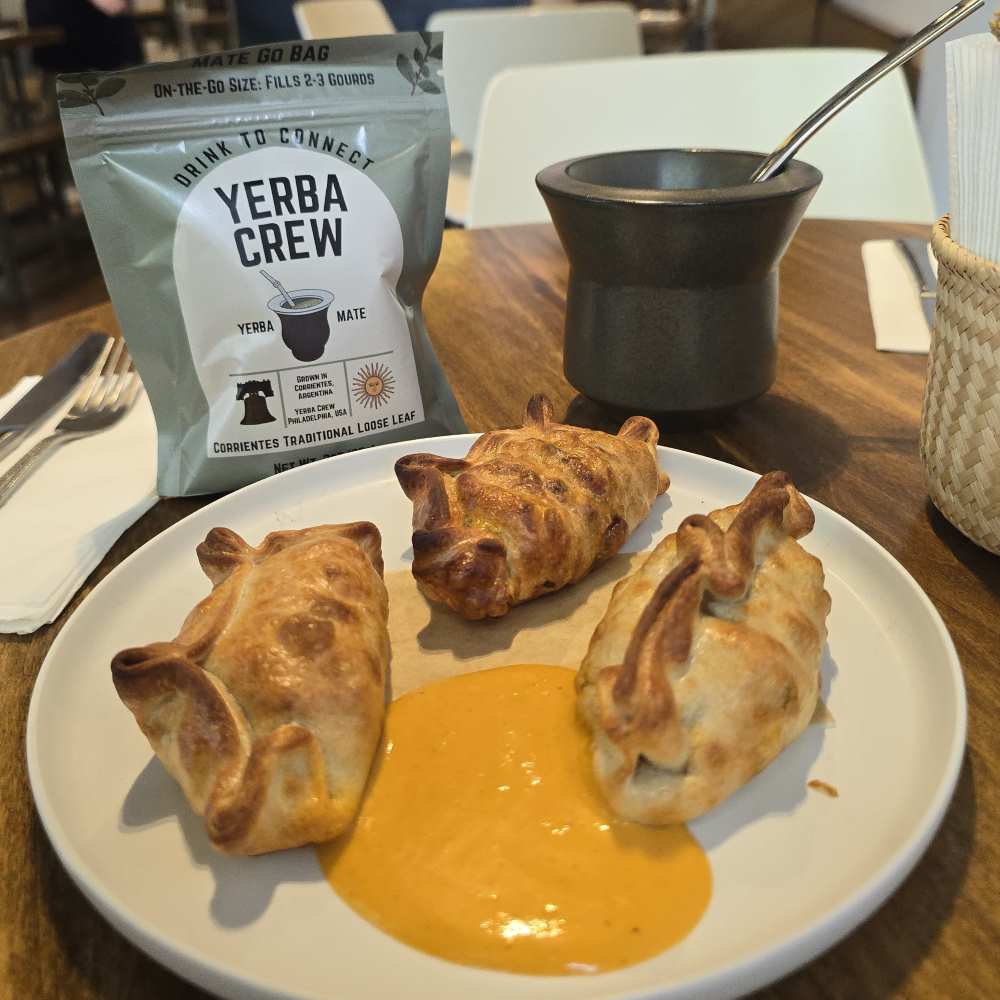
In the United States, National Empanada Day falls on April 8, a fitting excuse to make them a regular part of your table. Beyond lunch and dinner, there are breakfast versions with ham, sausage, or bacon plus egg and cheese, and dessert versions with apple and cinnamon, chocolate and caramel, or fried banana. Because empanadas are so dense, they pair best with something light and comforting. A yerba mate alongside makes for an instant, balanced meal.
Up Next
Empanadas are a classic asado starter. Read all about the history and culture of the Argentine asado.
Frequently Asked Questions
What is an empanada?
A baked or fried pastry shaped like a crescent and stuffed with fillings ranging from beef to fruit.
Are empanadas baked or fried?
Both. It varies by region: in Argentina, Salta tends to bake them while Tucuman fries them.
Where did empanadas originate?
In Galicia, Spain, from where Spanish colonists carried them to Latin America and the Philippines.
Drink to connect
The perfect complement to a fresh batch of empanadas is a good mate. Explore our yerba mate and starter kits. #DrinkToConnect
Other articles you may enjoy
The History and Culture of the Asado in Argentina